Shoulder Joint Replacement Surgery
The shoulder is a highly movable body joint that allows various movements of the arm. It is a ball and socket joint, where the head of The shoulder is the most mobile joint in the body, and that mobility depends on a smooth cartilage surface where the humeral head meets the glenoid socket. When arthritis wears that surface away, the two bones move directly against each other, and the pain and stiffness that follow do not respond to anything short of resurfacing the joint.
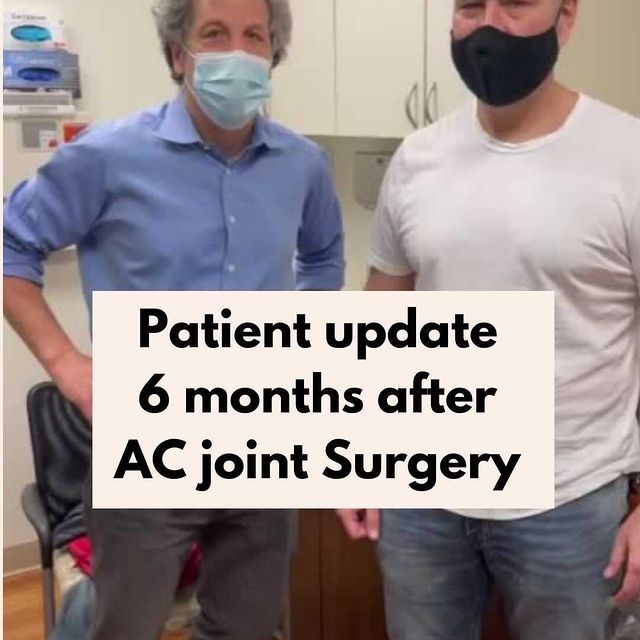
Shoulder replacement is an operation where the preparation matters as much as the implant, and Steven Struhl, MD has practiced in New York since 1991. He is board certified in orthopedic surgery and separately in sports medicine and is a Fellow of the American Academy of Orthopaedic Surgeons.
What Shoulder Replacement Surgery Involves
Total shoulder replacement removes the damaged articulating surfaces and replaces them with artificial components. The humeral head is replaced with a metal ball on a stem seated in the arm bone, and the glenoid socket is resurfaced with a smooth plastic component. Replacing both sides is what makes it a total replacement rather than a partial one.
- Anesthesia: general anesthesia, frequently combined with a regional nerve block that provides substantial pain relief into the first day.
- Exposure: an incision at the front of the shoulder, with the muscle planes separated rather than cut across.
- Humeral Preparation: the arthritic head is removed and the canal prepared for the stem, which is fixed either with cement or by press fit depending on bone quality.
- Glenoid Preparation: the socket is reamed to a smooth contour and the plastic component seated.
- Trial and Balance: trial components are placed and the shoulder taken through motion before the final implants go in.
- Closure: the joint capsule and the tissue planes are repaired in layers.
Who Is a Candidate for Shoulder Replacement
The clinical criteria are straightforward. What decides it is usually quality of life.
- Confirmed Arthritis: osteoarthritis or rheumatoid arthritis visible on imaging.
- Failed Conservative Treatment: medication, injection, physical therapy, and activity change all tried without lasting benefit.
- Pain at Rest: discomfort present without using the shoulder, and frequently disturbing sleep.
- Functional Loss: difficulty reaching a shelf, fastening a seatbelt, or dressing without help.
- Reasonable Bone Quality: enough glenoid bone to support a component, which CT confirms when there is doubt.
- Rotator Cuff Status: an intact cuff supports a standard total replacement, and a cuff that no longer works points toward a different design.
Recovery After Shoulder Replacement
- Weeks One to Six: a sling protects the repair, with gentle assisted motion started almost immediately, since early motion prevents the stiffness that is hardest to undo.
- Weeks Two to Six: light daily activity resumes, and most patients are managing routine tasks with the operated arm.
- Weeks Six to Twelve: the sling is discontinued, active motion advances, and strengthening begins.
- Months Three to Six: strength continues to build and most patients describe the shoulder as comfortable and functional.
- Months Six to Twelve: the final result settles, with improvement continuing well past the point most patients expect.
The strongest predictor of how much motion returns is how stiff the shoulder was going in. A joint that has been severely restricted for years does not return to normal, which is one practical argument against waiting indefinitely.
Risks of Shoulder Replacement Surgery
- Infection: uncommon, prevented with antibiotics and strict sterile technique, and treated seriously when it occurs.
- Component Loosening or Wear: the reason implants have a finite lifespan and the usual reason for revision.
- Instability or Dislocation: infrequent, and occasionally requiring further surgery.
- Nerve or Blood Vessel Injury: rare, given the anatomy around the shoulder.
- Stiffness: the most common source of disappointment, and the reason early motion is emphasized.
- Periprosthetic Fracture: a break in the bone around the implant, uncommon and more likely with poor bone quality.
- Medical Complications: including blood clots and reactions to anesthesia.
Diabetes, smoking, and previous shoulder surgery all raise risk, and each is worth addressing before an operation rather than after one.
Shoulder Replacement Surgery: Common Questions
How do I know when it is time for shoulder replacement?
There is no test that answers this, and the honest version is that timing is largely yours to decide with guidance. The medical criteria are straightforward, meaning arthritis visible on imaging with pain and loss of function that has not responded to medication, therapy, injection, and activity change. What tips the decision is usually quality of life. Pain that wakes you most nights, a shoulder that will not reach the shelf or fasten a seatbelt, and a life that has narrowed around the joint are the practical signals.
How long does a shoulder replacement last?
Modern shoulder replacements perform well over the long term, with the large majority still functioning at ten to fifteen years and many considerably longer. Longevity depends on age at surgery, activity level, implant type, and bone quality, and heavy loading shortens it. That relationship is the reason surgeons discuss waiting with younger patients, since the first replacement in a fifty year old is unlikely to be the last one.
Will I get full range of motion back after shoulder replacement?
Most patients regain motion sufficient for daily life comfortably, meaning reaching overhead, behind the back, and across the body. Full prearthritic motion is not the usual outcome, and the strongest predictor of final motion is how stiff the shoulder was before surgery. A shoulder that has been severely restricted for years does not return to normal, which is one argument against waiting indefinitely. Pain relief is the more reliable result, and it is generally the reason patients say they are satisfied.
What is recovery from shoulder replacement actually like?
A sling protects the shoulder for the first several weeks, with gentle assisted motion beginning almost immediately, since early motion prevents the stiffness that is hardest to undo. Light daily activity resumes within two to six weeks depending on the patient. Strengthening begins later, generally around six weeks, and continues for several months. Most patients are comfortable and functional by three months and continue improving for six to twelve.
What is a reverse shoulder replacement and would I need one?
A reverse replacement switches the positions of the ball and socket, placing the ball on the shoulder blade side and the socket on the arm. That reversal lets the deltoid muscle lift the arm in place of a rotator cuff that no longer works. It is used when arthritis coexists with an irreparable rotator cuff tear, in certain complex fractures, and in some revision situations. Whether it applies to your shoulder depends on the condition of the cuff, which is assessed on MRI before any replacement is planned.
What are the main risks of shoulder replacement?
The significant ones are uncommon and they are real. Infection, which is why antibiotics are given and the procedure is performed under strict sterile conditions. Component loosening or wear over time, which is the reason implants have a finite lifespan. Nerve injury, dislocation, stiffness, and fracture around the implant, all of which are infrequent. Patients with diabetes, patients who smoke, and patients with prior shoulder surgery carry higher risk, and those factors are worth addressing before surgery rather than after.
Schedule a Shoulder Replacement Consultation in New York City
Deciding on a shoulder replacement is easier once you can see the joint clearly, meaning how much cartilage is gone, what condition the rotator cuff is in, and what the alternatives actually offer at this stage rather than in general. Dr. Struhl evaluates shoulder replacement candidates at his Manhattan and White Plains offices and performs the surgery at an affiliated facility. Contact our office to schedule a consultation.
Medically reviewed by Steven Struhl, MD on