Shoulder Dislocation Treatment
The shoulder dislocates more often than any other joint in the body, and the reason is the same reason it moves so well. The ball sits against a shallow socket rather than inside a deep one, held in place by soft tissue rather than by bone architecture. Enough force in the wrong direction and it comes out.
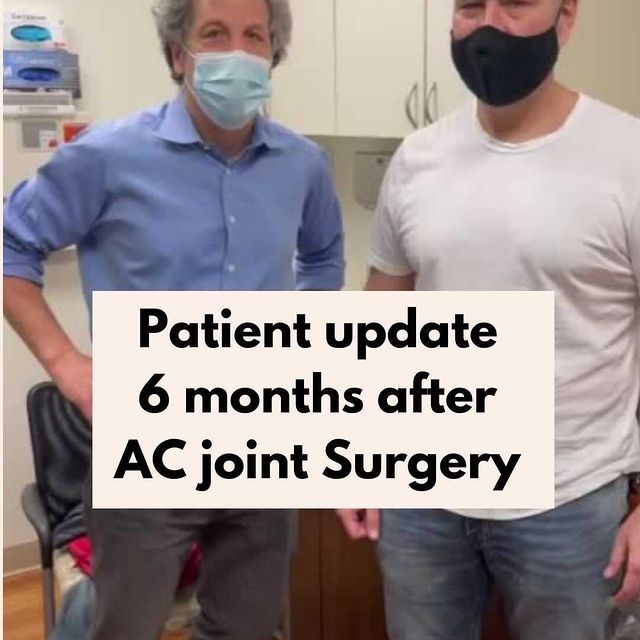
A first dislocation and a fifth dislocation are different problems requiring different conversations. Steven Struhl, MD is board certified in orthopedic surgery and separately in sports medicine and arthroscopic surgery, has practiced in New York since 1991, and has performed more than 5,000 arthroscopic procedures. He completed his sports medicine fellowship at Penn State University.
What Happens During a Dislocation
- Anterior Dislocation: the ball leaves the socket forward, accounting for the large majority.
- Posterior Dislocation: the ball displaces backward, uncommon and frequently missed initially.
- Inferior Dislocation: the ball displaces downward, rare and usually from significant trauma.
- Subluxation: the ball shifts partly out and returns on its own, sometimes momentarily.
Most anterior dislocations tear the labrum off the front rim of the socket, the injury pattern known as a Bankart lesion. Many also produce an impression fracture on the back of the humeral head where it struck the socket edge.
After the Shoulder Is Put Back
Reduction relieves the immediate problem and does not address what tore. That distinction is where a great many shoulders get lost.
- Imaging After Reduction: X rays confirm position and identify associated fractures.
- MRI Assessment: identifies labral tearing and capsular injury that plain films cannot show.
- Bone Loss Measurement: CT quantifies socket bone loss when recurrent dislocation is a concern.
- Structured Rehabilitation: restoring rotator cuff and scapular control over the following months.
Will It Happen Again
Recurrence depends heavily on age at the first dislocation, more than on how dramatic that first event was.
Patients in their teens and early twenties have high recurrence rates after a first traumatic dislocation, which is why surgical repair is discussed early with young athletes. The risk drops substantially with age, and a first dislocation in an older patient from a significant fall is frequently managed without surgery.
Each subsequent dislocation matters, because it can enlarge the labral tear and erode the socket rim. Enough bone loss changes what operation is appropriate, which is the argument for addressing a recurrently unstable shoulder rather than continuing to reduce it.
Treatment Options
- Closed Reduction: the ball is returned to the socket, usually in an emergency setting.
- Immobilization: a sling for a short period, followed by early controlled motion.
- Physical Therapy: strengthening the cuff and scapular muscles that control the joint.
- Arthroscopic Repair: the torn labrum and stretched capsule are repaired.
Schedule a Shoulder Evaluation in New York City
A shoulder that has been reduced in an emergency room has been treated for the dislocation and not necessarily for the injury underneath it, and the difference tends to show up as the second dislocation. Dr. Struhl evaluates shoulder instability at his Manhattan and White Plains offices. Contact the practice to schedule an appointment.
Medically reviewed by Steven Struhl, MD on